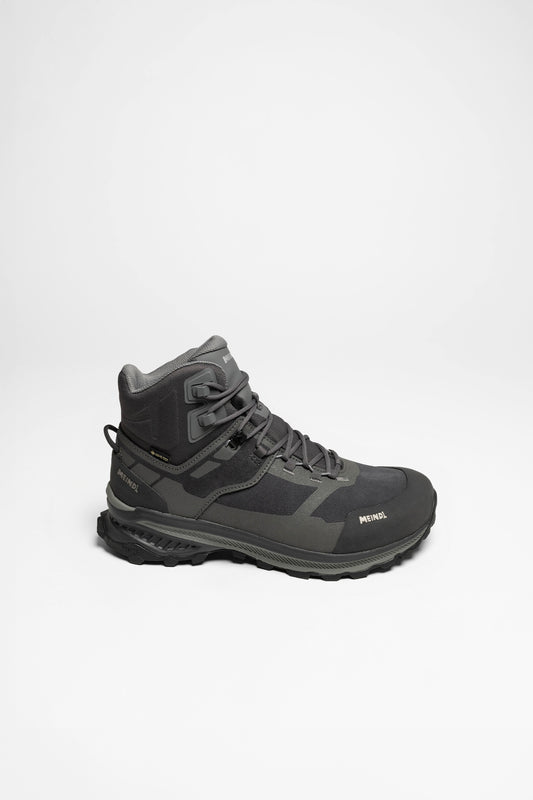
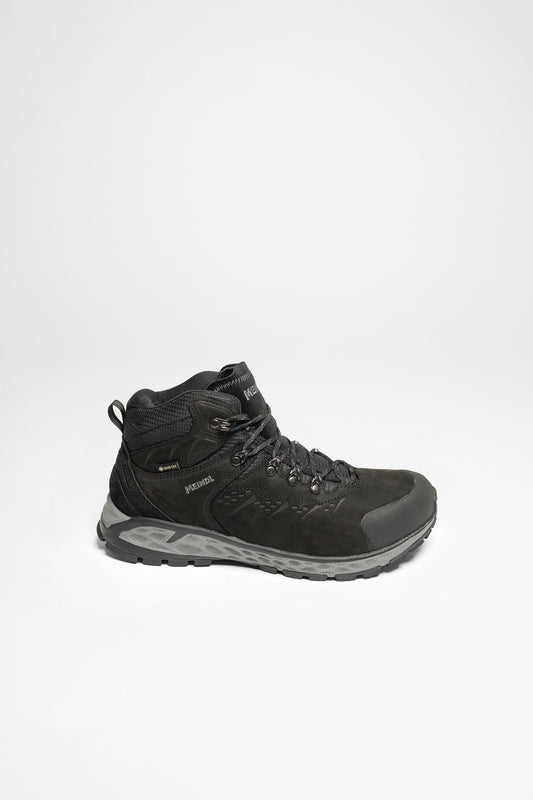
Men's Trekking Shoes

Good footwear is essential on long trekking tours. Men’s trekking boots are the top choice. They feature extra-grippy soles and maximum stability, taking you across all types of terrain, from forest trails to via ferrata routes. Take a look now at our range of men’s trekking boots from Meindl, Lowa and Hanwag.

Filtern & Sortieren
125 products

Hiking boots or trekking boots for men: What do I need?

As soon as you leave the beaten track and need a boot you can rely on over rough terrain or in the mountains, you definitely need a trekking boot. A hiking boot for a short walk in the Rothaar Mountains won’t be enough. On trekking tours, your shoes are in constant use for days on end. They also have to cope with heavy luggage and slippery surfaces. This puts footwear to the test. Our men’s trekking shoes from Lowa, Hanwag or Meindl are made precisely for this purpose and will get you safely to your destination on your tours.

Category A, B or C? Which men’s trekking boot is right for your hike?

A good men’s trekking boot not only fits your foot perfectly, but is also suited to your preferred hikes. After all, an alpine trekking adventure with scree underfoot and heavy rucksacks on your back places significantly greater demands on your footwear than a leisurely day hike through the Harz Mountains. To help you find a suitable model straight away, there are different categories.

Classes A and A/B are the lightweight options with flexible soles for natural foot roll and low to medium-height uppers. The focus here is on comfort, with cushioning and high breathability. These models are ideal for paved paths and tarmac. A popular long-standing favourite is the Meindl Lugano. For more athletic hikes, the Meindl Lite Hike GTX is perfect.

Class B comprises the all-rounders for proper trekking, featuring a rigid sole with a grippy tread, a high and stable upper, a scuff guard and high torsional rigidity. This makes these men’s trekking boots ideal for hikes with a heavy rucksack, taking you over steep and rugged paths and even across alpine terrain. The quintessential classic in this class is the men’s version of the Lowa Renegade, such as the EVO GTX Mid.

Class B/C comprises heavy-duty trekking boots. Even where there is no natural path, these sturdy boots will still get you safely to your destination. If necessary, even with a heavy rucksack on your back. Models such as the Hanwag Tatra II GTX are equipped for this, featuring an extra-high and sturdy upper, scree protection, a hard sole with excellent grip, and a system for attaching crampons. This even makes it possible to cross glaciers.

Does trekking only really begin for you where the air is already too thin for ordinary walkers? That’s where categories C and D come into play. However, in 95 per cent of cases, our men’s category C trekking boots are perfectly adequate, even if you want to tackle challenging via ferrata routes. You generally only need boots that are fully crampon-compatible when you’re tackling steep ice at altitudes above 4,000 metres.

Tip: Use our handy filter option on the left-hand side to filter our range of boots by the different trekking boot categories.

Do you have wide feet? Here’s how to find men’s trekking boots that won’t cause you any problems

Wide feet are not uncommon amongst men. Many have naturally very broad feet or pronounced flat-spread feet. If, in such cases, you choose a boot that’s too narrow for your trekking trip, every kilometre you walk will quickly become a nightmare because the boot will pinch and rub everywhere. The weight on your back and the heat in summer cause your feet to swell even more.

If you’ve already experienced such problems with other hiking boots, you should take a closer look now. It’s best to choose a men’s hiking boot that’s been crafted using a wide last. This is the case with:

  • the ‘Wide’ or ‘StraightFit’ models from Hanwag
  • the ‘W-last’ shoes from Lowa
  • the ‘Comfort Fit’ range from Meindl

Popular models from our range of trekking shoes include, for example, the Hanwag Alaska Wide GTX for men from Hanwag and the Antelao GTX from Meindl.

Good to know: as well as the width, the boot must of course also fit your feet in terms of length. For most models in our shop, we recommend ordering the boot half a size to one size larger. This way, you’ll be prepared for your feet to swell and for your feet to slide forward when walking downhill, and you can even wear two pairs of socks in freezing winter temperatures.

Gore-Tex vs. leather lining: which is better for men’s trekking boots?

That depends on your personal preference and the region where you’ll be trekking. Most of the shoes in our range feature a Gore-Tex membrane (GTX). This is ideal for the rather changeable weather in our part of the world, as it keeps your feet dry despite wet meadows or rain showers. Sweat from inside is also transported outwards as water vapour.

However, if you’re mainly trekking in dry and warm regions, Gore-Tex loses its advantages, as it relies on a temperature gradient (cold outside, warm inside the boot). That’s why, on the Camino de Santiago or in even more southerly climes, you’re better off with a boot with a leather lining. Whilst this isn’t waterproof like Gore-Tex, it can be made water-repellent with wax.

Frequently Asked Questions (FAQ)

Can I cross the Alps in Class A/B trekking boots?

No, for a crossing of the Alps (e.g. via the E5 from Oberstdorf to Merano), a lightweight men’s trekking boot in Category A/B is usually too soft. A Category B boot is a better choice, as it provides the necessary torsional stiffness and offers good protection against scree and twisted ankles.

What helps prevent the heel from slipping and blisters forming in trekking boots?

A 2-zone lacing system helps prevent the heel from slipping and blisters forming, as it allows you to secure your foot using so-called deep-set hooks. Otherwise, you’ll need a good pair of hiking socks, for example made from merino wool. You can also wear a pair of nylon socks underneath your hiking socks to reduce friction.

What is the difference between Vibram soles and standard soles?

Vibram soles are made from a special rubber compound and feature a unique lug design. They ensure maximum grip in men’s trekking boots in both winter and summer, even on wet surfaces and in mud. Compared to standard shoe soles, they are also more torsion-resistant and more abrasion-resistant.

How do I break in my new men’s hiking boots properly?

You should always break in new trekking boots in several stages. Start by wearing them for a few hours at home or in the office (always with hiking socks), then take them on longer walks, such as when walking the dog. Only once you’re comfortable with your footwear should you attempt your first day hike.